Lidui Park Railway Station (离堆公园站, Liduigongyuan Station) is the closest train station to the Dujiangyan Irrigation System (都江堰) — a 2,300-year-old UNESCO World Heritage Site still working today. Opened in 2013 as the terminus of the Chengdu–Dujiangyan Railway’s Lidui branch line, it’s an underground station in the heart of Dujiangyan city. You step out of Exit D and you’re already in the sights — no taxi, no bus, just walk.
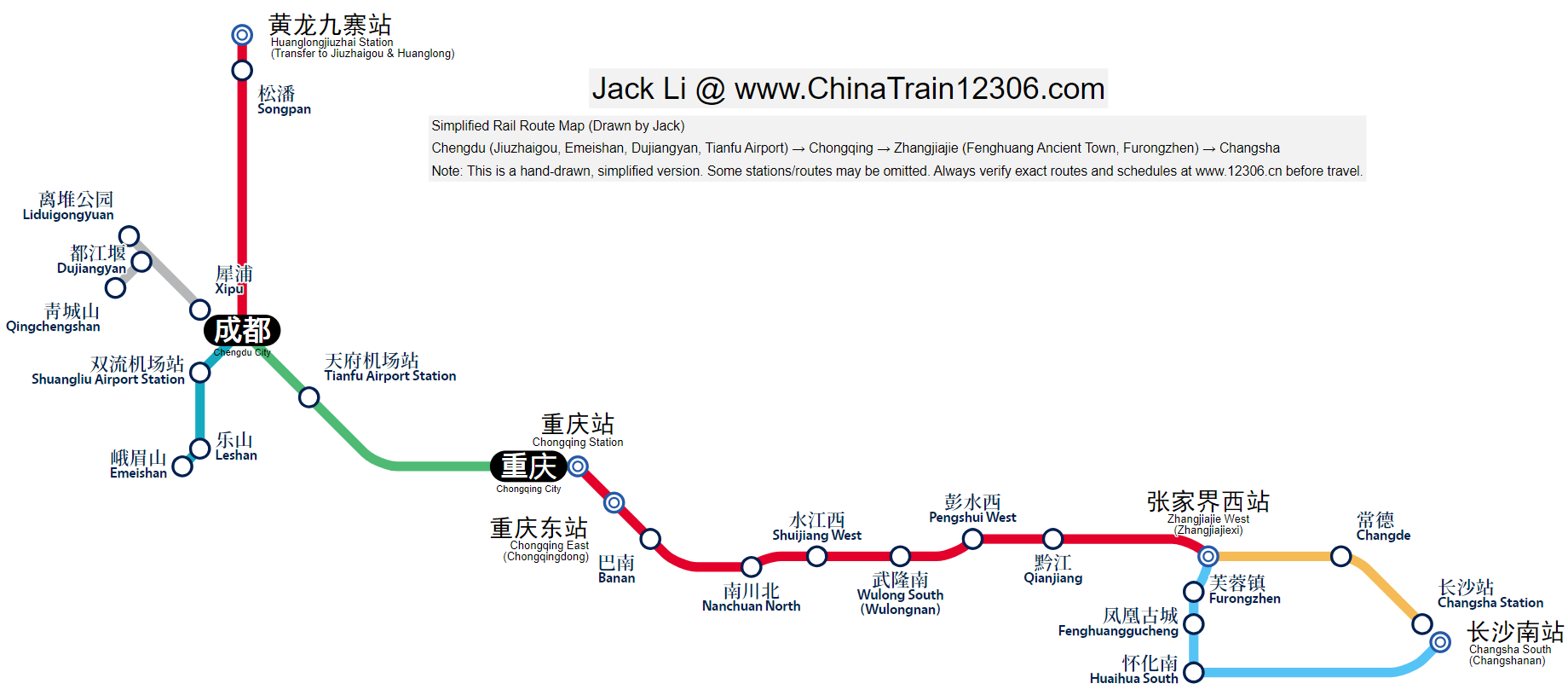
Lidui Park Station at a Glance
- Station name: Lidui Park Railway Station / 离堆公园站 (Liduigongyuan)
- Location: Underground, Taiping Street, Dujiangyan City, Chengdu, Sichuan (四川省成都市都江堰市太平街)
- Opened: July 23, 2013 — Southwest China’s first underground passenger rail line
- Railway line: Chengdu–Dujiangyan Railway Lidui Branch Line (成灌铁路离堆支线), design speed 80 km/h through the urban tunnel section
- Daily trains: ~20 departures to/from Xipu (犀浦) and beyond
- Xipu → Lidui Park: 23–40 min, ¥5–10 (second class / soft seat)
- Distance to Dujiangyan Scenic Area: ~500 m — 10-minute walk from Exit D
⚠️ Lidui Park vs. Dujiangyan Station — Don’t Get the Wrong One
There are two stations serving Dujiangyan, and they’re not interchangeable. This is the mistake I see travelers make most often:
| Lidui Park Station (离堆公园站) ⭐ | Dujiangyan Station (都江堰站) | |
|---|---|---|
| Distance to scenic area | ~500 m — walk 10 min | ~6 km — need taxi/bus |
| Location | City center, underground, right at Guanxian Ancient Town gate | Suburban industrial area — nothing nearby |
| Train frequency | ~20/day | More frequent |
| Exit = sights? | ✅ Yangtianwo panda sculpture, ancient town, South Bridge — all on foot | ❌ Taxi into town (¥15–20, 15 min) |
| Best for | Tourists — this is your station | Backup if Lidui Park tickets sell out |
Bottom line: Always search “离堆公园” or “Liduigongyuan” on 12306 or Trip.com first. If it’s sold out — which happens during holidays and peak weekends — Dujiangyan Station is a perfectly fine fallback. Just budget an extra ¥15–20 and 15 minutes for a taxi.
Search Train Schedule
Getting Here from Chengdu
The route is a straightforward one-transfer hop:
Metro Line 2 or 6 → Xipu Station (犀浦站) → same-station transfer to train → Lidui Park Station.
- Departure point: Xipu (犀浦站) — the northwestern terminus of Metro Line 2 and Line 6. Metro and railway share one building; transfer takes ~5 minutes on foot, but allow 15 minutes to clear railway security.
- Train type: S-class suburban trains (市域列车, since April 2024) or C-class intercity trains. No D or G high-speed trains on this short corridor.
- Duration: 23–40 minutes depending on intermediate stops. Fare: ¥5–10.
- Frequency: Every 15–30 minutes during peak daytime hours. First departure from Xipu ~06:15, last return from Lidui Park ~21:55. Since April 2026, two fixed evening services run in each direction, so you can stay for the South Bridge night view and still get back to Chengdu the same evening.
- Unique perk: This is one of the rare Chinese railway lines where you can use Tianfutong (天府通) app QR code or physical transit card to tap and ride — no advance ticket needed. Otherwise, 12306 and Trip.com work as usual, including with foreign passports.
Exit the Station & Walk to the Sights
This is why you picked Lidui Park Station: the walk from platform to scenic area is the sightseeing:
Exit D → Yangtianwo Square (仰天窝广场) → cross the road → Guanxian Ancient Town (灌县古城) through Xuanhua Gate (宣化门) → walk the old street → South Bridge (南桥) → Dujiangyan Scenic Area South Gate.
Three stops worth noting along the way:
- Yangtianwo Square — Free. The 26-meter-long “Selfie Panda” reclining sculpture is Dujiangyan’s unofficial mascot. Excellent photo spot; go before 9 AM to avoid crowds.
- Guanxian Ancient Town — Free. Snack stalls, tea houses, hanfu rental, souvenir shops. It’s a pleasant commercial old street — not a museum piece, but a nice stroll with food.
- South Bridge or Nanqiao (南桥) — Free. Grand covered bridge over the Min River. The famous “Blue Tears” (蓝眼泪) LED illumination starts around 20:00 and runs until 23:00. The river glows turquoise — it’s become a major social media draw. Time your return train accordingly.
Dujiangyan Scenic Area
The Dujiangyan Irrigation System was built in 256 BC by governor Li Bing and his son. It still diverts the Min River without a single dam — using only topography and hydraulic principles. You’ll see three core structures: Yuzui (Fish Mouth levee), Feishayan (Flying Sand Spillway), and Baopingkou (Bottle-Neck Channel).
- Ticket: ¥80 (adult), ¥40 (student/senior), free for children under 6 and adults over 60.
- Hours: 08:00–18:00 (peak season). Last ticket 17:30.
- Time needed: 2–3 hours.
- ⭐ Easy route (recommended): Enter at Qinyan Tower Gate (秦堰楼/6号门) → Erwang Temple → Anlan Suspension Bridge → Yuzui → Feishayan → Baopingkou → exit South Gate. All downhill, ~2 hours, great for families.
- Classic route: South Gate → Yuzui → Anlan Bridge → Erwang Temple → Songmao Ancient Trail. ~3–4 hours, moderate.
What Else to See in Dujiangyan
Dujiangyan rewards more than a half-day dash. If you have extra time:
- Mount Qingcheng (青城山) — The birthplace of Taoism and a UNESCO site, known as “the most secluded place under heaven” (青城天下幽). Front Mountain (前山, ¥80) has ancient temples and Taoist shrines; Back Mountain (后山, ¥20) is all waterfalls and forest trails. Reach it via Qingchengshan Station (青城山站) — one stop beyond Dujiangyan Station on the same line, about 15 minutes by train from Xipu. From Lidui Park, you can also taxi it in ~20 minutes.
- Panda Valley (熊猫谷) — A quieter, more natural panda experience than the Chengdu base. Red pandas roam freely without fences in the star area. ¥55, open 07:30–18:00. Tickets must be booked online in advance — there’s no walk-up window. ~15 minutes by taxi from Lidui Park.
Staying overnight? Basic hotels near South Bridge and inside Guanxian Ancient Town start from ~¥100/night. It’s worth it — you get the South Bridge at its best (after 20:00) without watching the clock for the last train.
Onward: Leshan, Emeishan & Airports
After Dujiangyan, many travelers head to the Leshan Giant Buddha (乐山大佛), Mount Emei (峨眉山), or a Chengdu airport. Here’s the practical answer:
The core strategy: get to Xipu, then go anywhere. Almost every train from Lidui Park and Dujiangyan Station terminates at Xipu. From Xipu, the Chengdu metro and high-speed rail network connects you to everywhere else in Sichuan.
| Destination | Best Route | Time | Which Station |
|---|---|---|---|
| Leshan (乐山) | Train to Xipu → Metro to Chengdu East/South → frequent HSR to Leshan (乐山站). An occasional direct train from Lidui Park/Dujiangyan to Leshan also exists — check 12306 for your date. | 2–3 hrs | Either — pick whichever has a convenient departure time |
| Emeishan (峨眉山) | Same pattern: Xipu → Chengdu East/South → Emeishan (峨眉山站). The Chengdu–Emeishan corridor runs 10+ trains daily. Occasional direct trains from Lidui Park to Emeishan also exist. | 2.5–3 hrs | Either |
| Shuangliu Airport (CTU) | Train to Xipu → Metro or train to Chengdu South/East → train to Shuangliu Airport Station (双流机场站). Direct trains from Lidui Park to Shuangliu Airport run occasionally — check 12306. | 1.5–2 hrs | Lidui Park preferred if a direct train lines up |
| Tianfu Airport (TFU) | Train to Xipu → Metro to downtown → Metro Line 18 to Tianfu Airport, or Xipu → Chengdu East → HSR to Tianfu Airport Station. No direct trains from Dujiangyan to TFU. | 2.5–3 hrs | Either |
Jack’s take: “Don’t wait around for a direct train. The Xipu transfer is so reliable — trains every 15–30 minutes — that you’re almost always better off just getting yourself to Xipu and connecting from there. The occasional direct train to Leshan or Emeishan is a nice bonus when the timing happens to work, but I wouldn’t plan my day around it. Check 12306 for your travel date, pick whatever departure lines up, and go.”